Your Credit Score Explained in Plain English
Image: CardMapr.nl / Unsplash
A credit score is an estimate of how likely a person is to repay borrowed money as agreed. A lender may use it with income, debt, collateral, and its own policies when evaluating an application.
It is not a personal “trust rating,” and it does not guarantee approval, rejection, or a particular interest rate.
Why you may have more than one score
Companies use different scoring models, model versions, credit-reporting agencies, data snapshots, and score ranges. A consumer score shown in an app may therefore differ from the score used for an auto loan or mortgage.
This is also why a universal “five factors with fixed percentages” table is misleading. Some branded models publish educational breakdowns, but those percentages do not describe every score a lender may use.
Information that can matter
The Consumer Financial Protection Bureau says scores are generally calculated from information in a credit report. Depending on the model, relevant information may include:
- how many accounts you have and how long they have been open;
- whether bills were paid on time;
- current balances and how much available revolving credit is being used;
- collection activity, bankruptcies, or other public-record information where applicable; and
- recent applications or new accounts.
Paying bills on time has the greatest impact according to the CFPB’s consumer guidance. The effect of any single change, however, depends on the model and the rest of the file.
Credit report and credit score are different
A credit report is a record of reported credit activity. A credit score is a number produced from information available to a scoring model.
Checking a report can reveal an address, account, balance, or payment status that needs attention. It cannot promise a particular score change.
In the United States, AnnualCreditReport.com is the federally authorized site for free reports from Equifax, Experian, and TransUnion. Be cautious with look-alike sites that request payment or sell monitoring as if it were required.
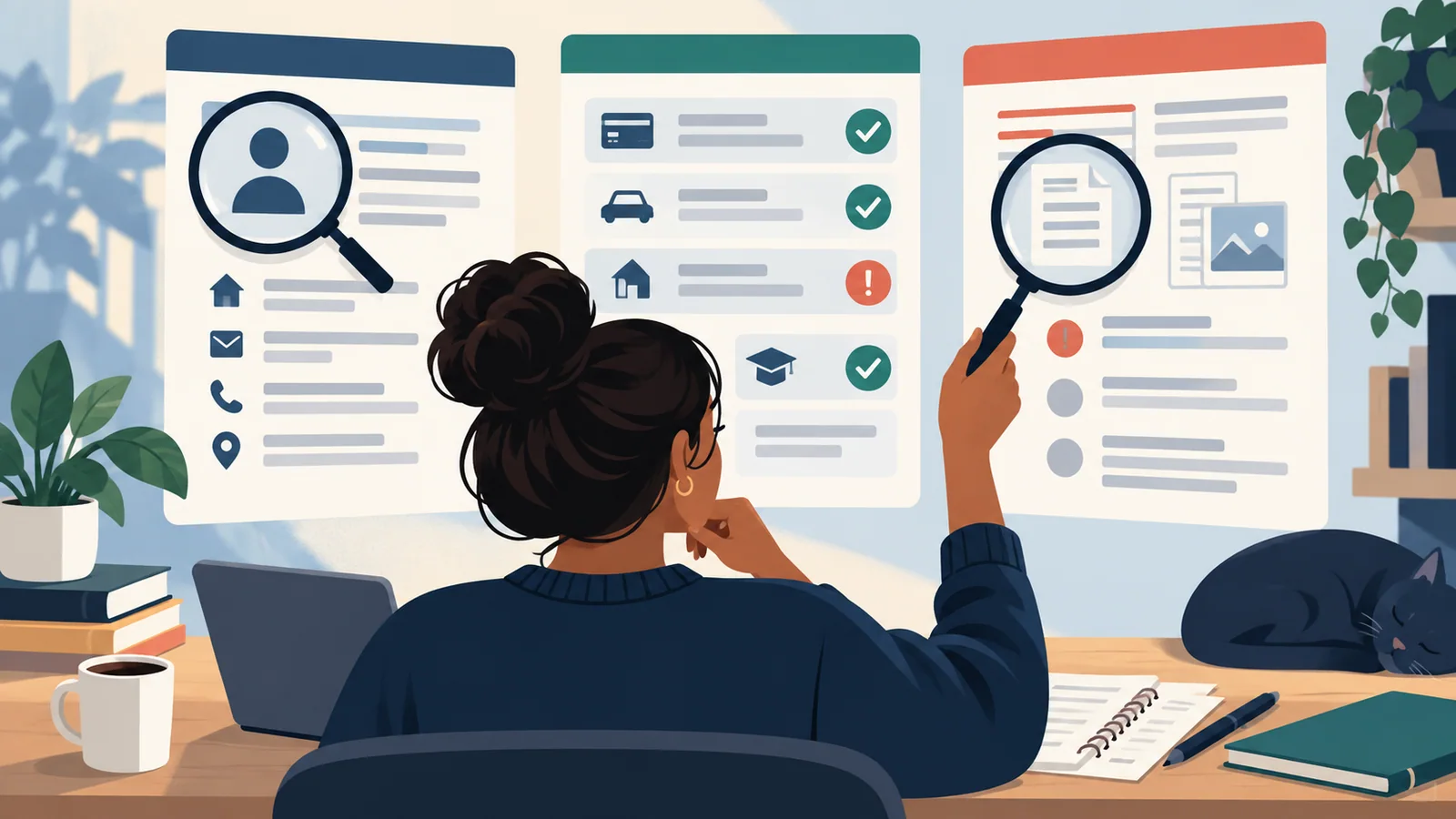
A careful credit checklist
- Review reports from all three nationwide credit-reporting companies.
- Confirm that identifying information and accounts belong to you.
- Compare balances and payment status with your own records.
- Dispute information you believe is inaccurate with supporting documents.
- Pay required amounts by their due dates when possible.
- Read the terms before opening or closing an account.
Autopay can reduce missed-payment risk, but verify the payment amount, due date, and bank balance. Do not carry interest-bearing debt solely because someone says it is required to “build credit.”
Claims to treat cautiously
- “Keep utilization under exactly 30%.” Lower revolving balances may help in many models, but 30% is not a guaranteed threshold or universal optimum.
- “A change will appear in 30 days.” Reporting schedules and scoring updates vary.
- “Checking your score never affects credit.” Reviewing your own report or score is generally a soft inquiry, but a lender’s application inquiry can be treated differently.
- “One score is your real score.” Multiple valid scores can exist at the same time.
Source notes
- The CFPB guide to understanding credit scores explains model variation, common inputs, and the importance of on-time payment.
- The CFPB’s answer to “What is a credit score?” distinguishes scores, models, and credit-report information.
- AnnualCreditReport.com is the federally authorized source for free U.S. credit reports.
Source check: 27 July 2026.
This article provides general education, not individualized financial, legal, or credit-repair advice. Credit reporting and lending rules vary by jurisdiction.
creditcredit scoremoney basicspersonal finance